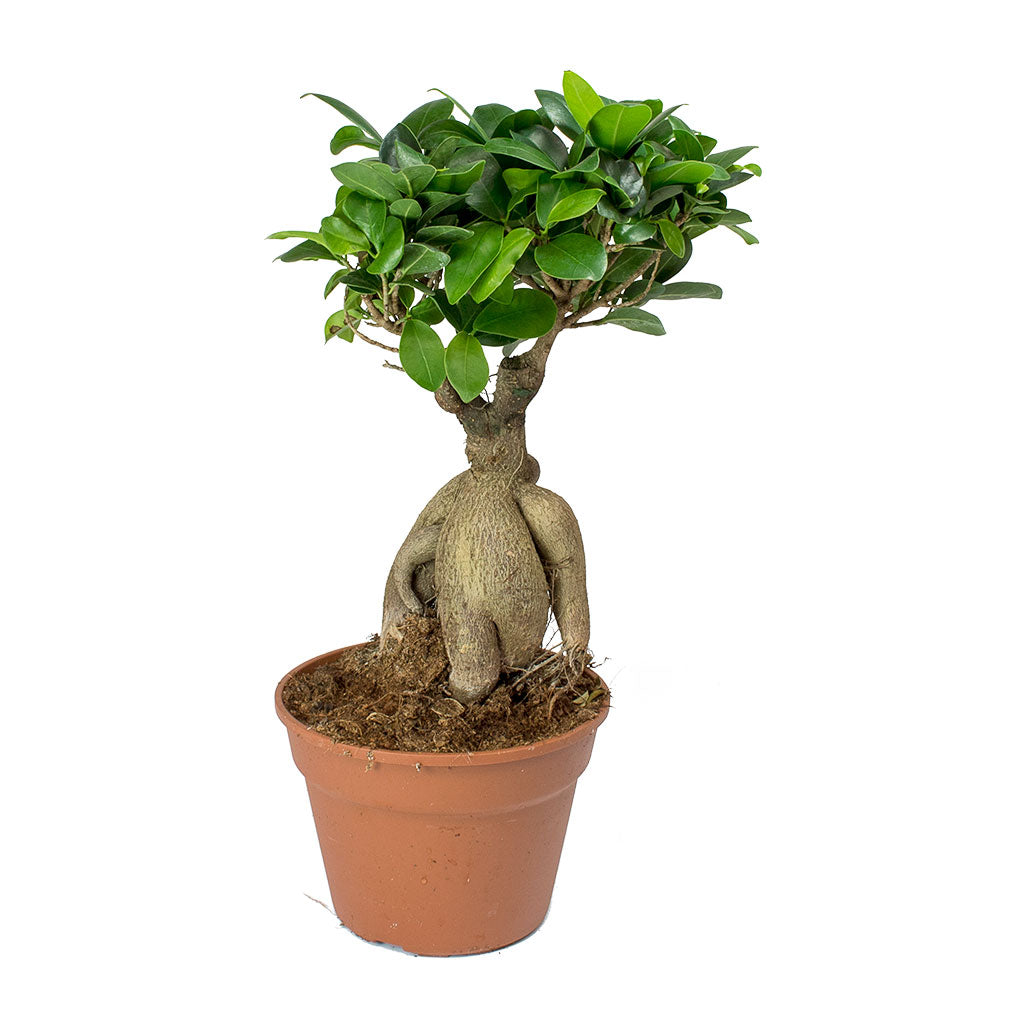
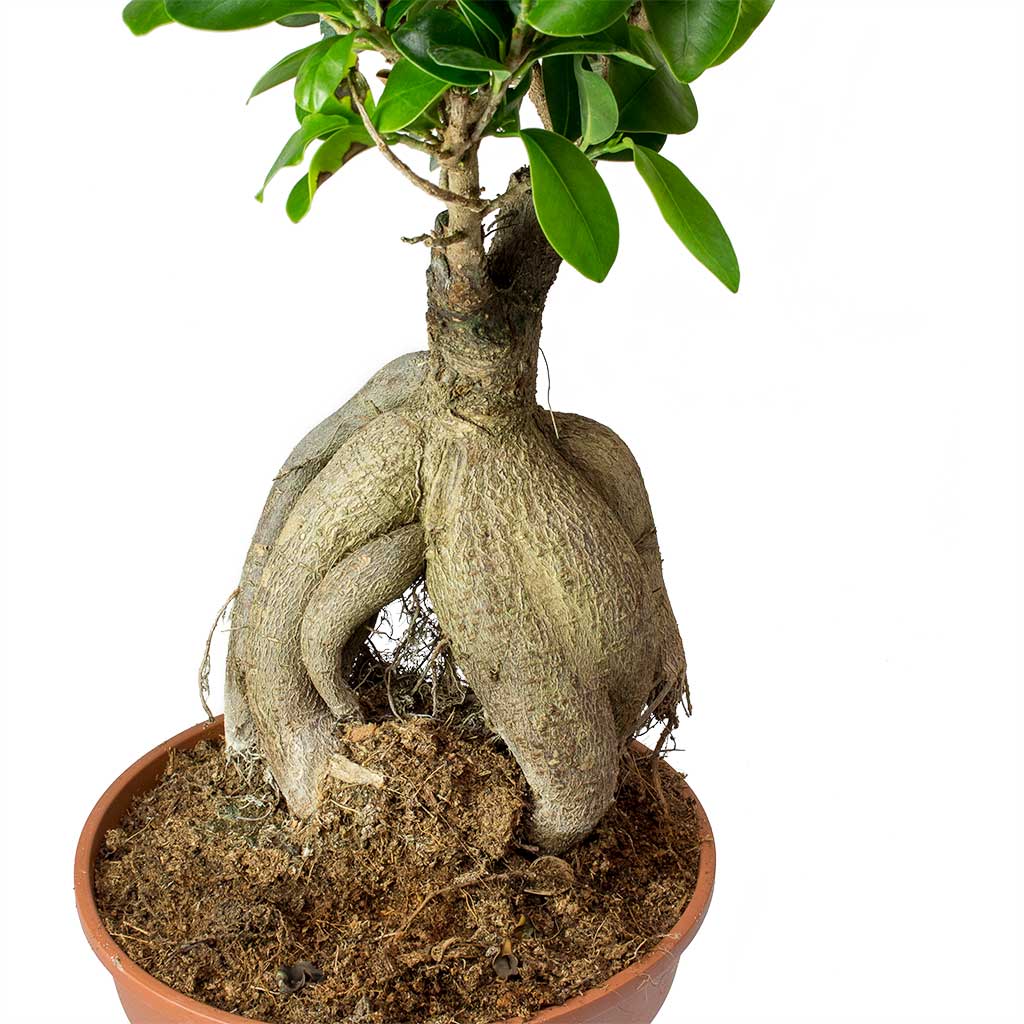
Ficus Gingseng is native to south and eastern Asian countries. It is in the Ficus genus but has a chubby trunk, which is similar to ginseng roots – hence this common name. Its botanical name is Ficus microcarpa. The leaves are small, dark green and oval-shaped. Ficus microcarpa has many common names including Pot Belly Fig, Laurel Fig, Laurel Rubber, Curtain Fig and Strangling Fig. Ficus microcarpa Ginseng make excellent bonsai and look brilliant in any contemporary room setting.
How do we measure our plants?
Plant sizes are shown as the grow pot diameter x the total height of the plant. This means the diameter of the grow pot at the top of rim x the total height of the plant including the grow pot. It therefore includes the plant roots etc as well as the height or length of the plant.
Please note: plant heights are approximate and are provided for indicative purposes only. Plants suitable for hanging may be depicted in a hanging grow pot, the actual grow pot used to ship the plant might not include these attachments.
For plants in soil the key size in determining the maturity and fullness of a plant is the diameter of the grow pot. The larger the diameter, the more mature the plant.
How do we size hydroculture plants?
Hydroculture plants are measured the same way as soil plants, however the grow pots are sized by diameter plus their standardised heights, which allows a water meter to be fitted. For example: an 18/19 grow pot has an 18cm diameter at the rim and is 19cm tall.
Hydroculture plant roots have been specially adapted to grow in hydrogranules, which creates a smaller, more fleshy and hardier root system. This results in mature plants being available in smaller grow pots than their soil based equivalents.
How do I choose the correct sized decorative pot to fit my houseplant?
Check the grow pot diameter:
Determine the plant's grow pot diameter. Compare this to the size of the opening of your chosen decorative pot and ensure it is big enough to insert the plant's grow pot through the opening (see diagram below).
We show the size of the decorative pot openings for each pot as you click the different size options or hover over the size buttons.
Tip: Pick a decorative pot that has an opening about 1cm larger than the size of the plant's grow pot. For smaller plants (up to 14cm grow pots) you should go slightly smaller and for larger plants (above 24cm) you can add 2-3cm without the pot looking too large for the plant.
Note: If the shape of the planter tapers strongly at the base, it might not be wide enough for your plant to sit squarely at the bottom. In this case you can add a liner on a small layer of pebbles to increase the size of the base. This will however raise the height of the plant slightly in the planter.
For hydroculture plants use the size tip to select a decorative pot that will accommodate the waterproof liner recommended for the plant in the hydro kit.
Artstone planters include a non-removable water reservoir, which raises the internal base height of the planter. These planters work best with the plant re-potted directly into them rather than left in their grow pots. If the intention is to leave the plant in its grow pot and sit it directly into the Artstone planter rather than re-potting the plant directly into the planter, please ensure you select a large enough size that will have enough internal height to hide the grow pot.
Check the grow pot height:
Soil plants - The height of the grow pot can vary slightly, but is usually slightly smaller or the same as its diameter. Check your planter will be tall enough to hide the grow pot if you are not re-potting directly into the planter.
Hydroculture plants - These require a hydro kit for assembly, this includes a waterproof pot liner with a base wide enough to accommodate the hydroculture grow pot. The size tip provided for each hydroculture plant provides a recommended size for the external diameter of the decorative pots that will accommodate the specified waterproof liner.
The grow pot height is standardised (normally 12cm or 19cm) and shown on the size option for each hydroculture plant.Ensure the external height of your decorative pot is at least 2-3cm higher than the grow pot height of the hydroculture plant.
Important:
The opening measurement of the decorative pot is the size of the access hole for inserting the plant's grow pot as well as an indication of the minimum liner size needed. It is not the same as the external diameter of the pot which is the overall outer size of the pot. Please note all measurements are approximate and can vary slightly due to the handmade nature of our pots.
Note: Liners are "squashy" so they can be pushed through the opening to expand and fit closer to the pot wall once inside. Liners can also be cut down to size with scissors for a neater fit if they bulge inwards slightly at the top.
For round shaped decorative pots we provide the external diameter of the widest point so you get a sense of how large the pot is on the outside, as well as the width of the opening. We also provide the overall height so you unders tand how tall the pot is.
For square, rectangular and oval planters we provide the external dimensions for Lenth x Width x Height, plus the access width (internal as these are often displayed with a mix of plants.
Collections: Green Foliage, Indoor Plants, Outdoor Plants
Ficus microcarpa Outdoor Plant Care Guide
The Ficus Gingseng prefers a bright room with plenty of indirect light, and perhaps even a little direct sun in the morning. But direct sun for longer hours will scorch the plant
Keep the plant steadily moist, but do not allow it to sit in water or it will drop leaves and may develop root rot. Allow the top inch of the soil to dry between waterings.
Ficus does well in temperatures of around 16°C - 24°C. This plant originates from the tropics, so temperatures need to be kept consistently warm for the tree to survive. This plant can survive as low as 10°C for short periods
Feed the plant a balanced fertilizer once in a month.
Not pet friendly
Yes
Support
Typically replies within an hour

